Three Sisters Garden Layout | Full Guide: Planting + Harvest
Looking for the best bang for your buck in your garden? Striving toward a self sufficient homestead? You just found your missing piece—the three sisters! In this post, we’ll share the three sisters garden gammet: layout, timing, seed selection, harvest, and much more!
Get ready, friend. Your life may very well be changed forever after reading this. Ours was.

It was the winter of 2020, and we had just purchased our 5 acre homestead. We were complete newbies, having just moved out of the suburbs. But, as the growing season neared, we dreamed up our ideal homestead layout and how we could feed our family year round.
That’s when two significant things happened.
First, I read The Resilient Gardener by Carol Deppe. We had grown gardens previously for fresh, in-season eating. But this book opened up our eyes to the world of storage crops that can feed you all through the winter months into next year’s growing season.
Next, we attended a conference where a farmer with Native American lineage shared the benefits of a three sisters garden and how to plant one. We were blown away by the practicality and beauty of this ancient technique.

With that in mind, I came up with the plan for what we call our 1/4 Acre Self Sufficient Garden area, where the three sisters have become a prominent feature.
That first year, we were amazed with the productivity of our three sisters garden. Hundreds of winter squash, gallons of dried beans, and enough dent corn to feed our family for years to come.
We’ve planted a 3 sisters garden every year since, and believe every homesteader or avid gardener should consider growing one too!

What is a Three Sisters Garden?
A three sisters garden is an ancient companion planting technique where corn, beans, and squash grow in a symbiotic relationship.
In other words, they’re a big happy family and all help each other out!

To picture it:
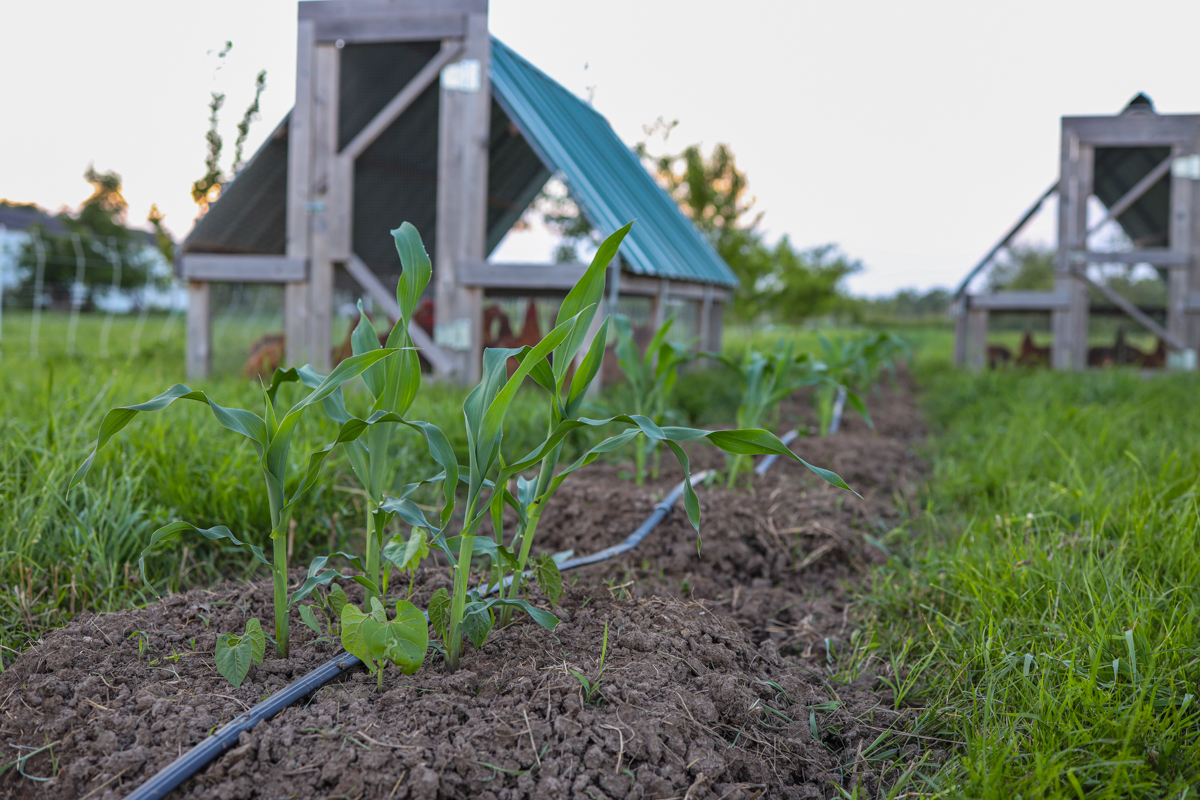
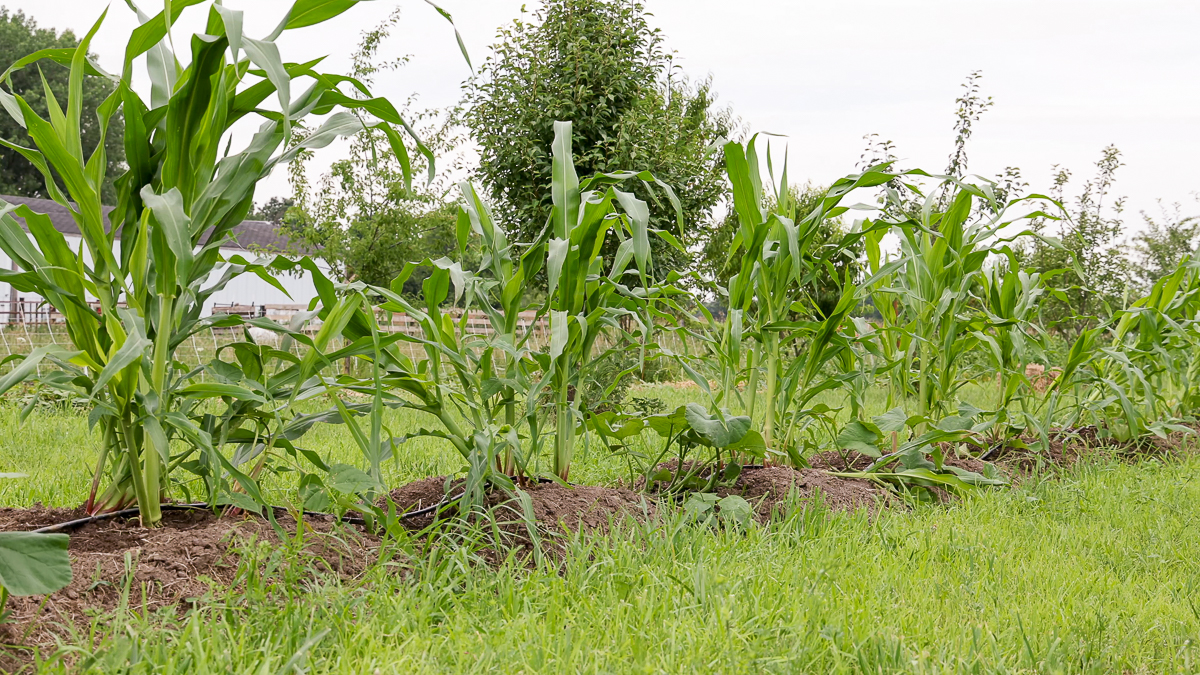
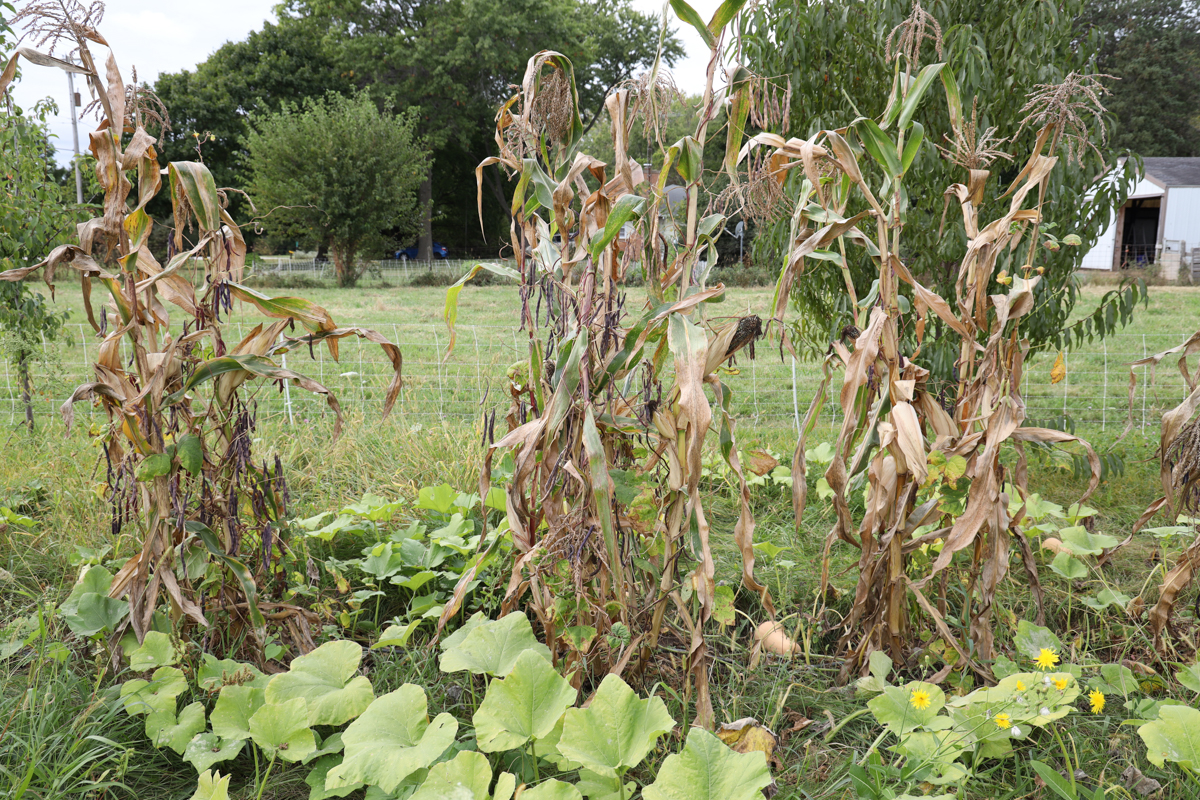
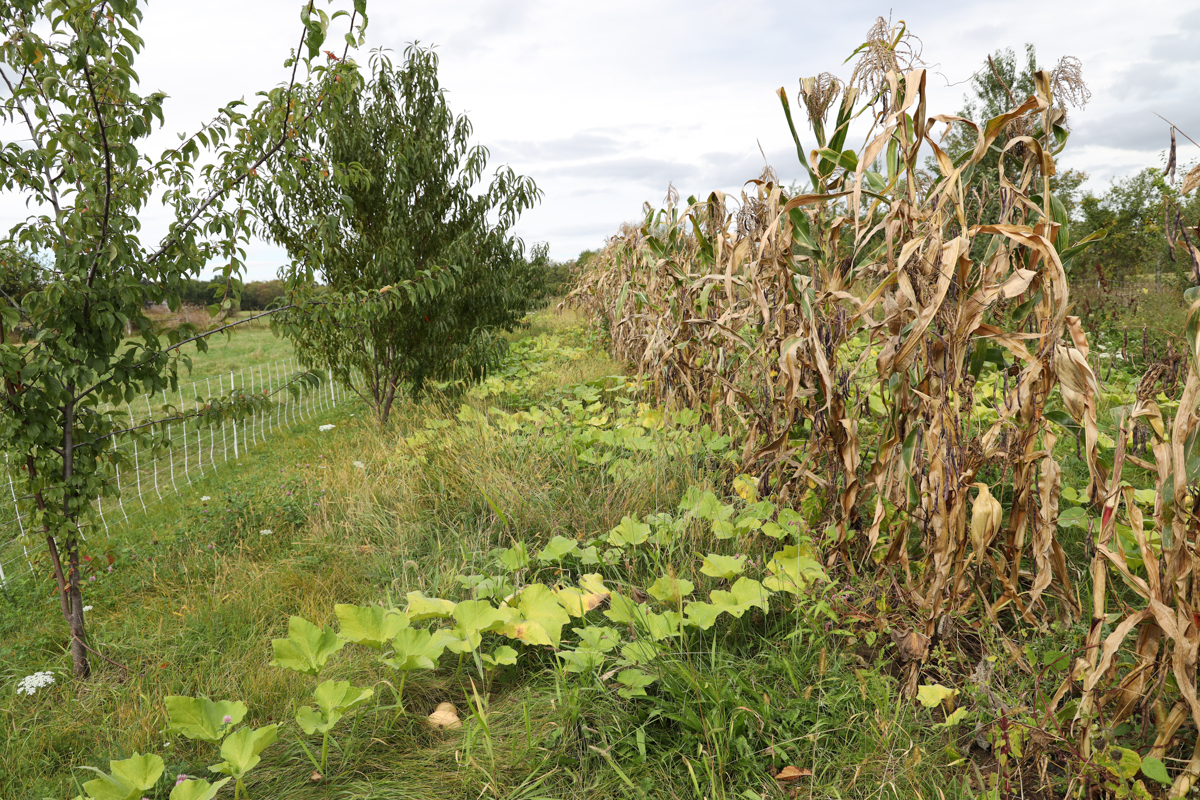
(1) Tall, strong stalks of corn grow in the center of a continuous row of mounds.
(2) Also on the mounds, pole beans then climb the corn stalks as a natural trellis.
Your corn and beans become best friends! Not only does your corn provide a sturdy trellis for your beans to climb up, but since beans are a legume, they add nitrogen back into the soil. And corn LOVES nitrogen!
(3) Between the mounds, winter squash sprawl everywhere and form a brilliant ground cover.

The impact of the long, sprawling vines, and large leaves that the squash plants provide is threefold:
1. Shade is provided to keep soils cooler.
2. This maintains more moisture, adding drought resistance to the whole system.
3. The leaf canopy creates a natural weed barrier over the garden.
It’s truly a sight to behold.
We’ve often said that a three sisters garden, just makes sense. Almost as if these 3 plants are designed to grow together.

Why Plant The Three Sisters?
As homesteaders looking to be less dependent on the grocery store and grow as much food as we can from our land to feed our family year-round, the three sisters has become an integral part of our strategy to achieve this.
Here are some of our WHY’s:
- Highly Productive. When planted in fertile soils, even a modest-sized three sisters garden is capable of producing hundreds of pounds of food.
- Year-Round Food. All three crops—corn, beans, and squash—are optimized for long-term storage pretty much right from harvest.
- It’s fun! Seeing the three sisters pop up and work in harmony together is stunning to observe, year after year.
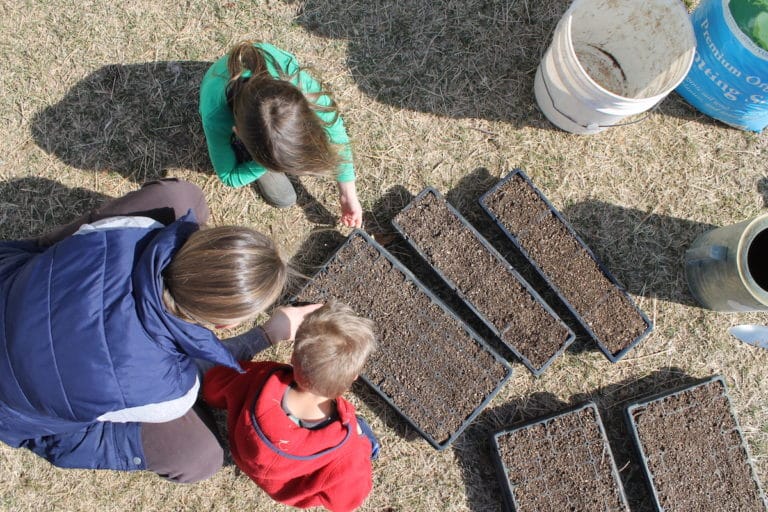
- Family Friendly. Our kids get excited to help with the three sisters every year! Large seeds for planting. Big, non-delicate crops for harvesting. Bean hunts. Squash land mines. It has it all!

- Kitchen Friendly. We are constantly finding new and delicious recipes where corn, beans, and squash become the base of SO many dishes.
- Not (that) Time-Intensive. Yes, it takes time to prepare the soil, form the mounds, and do some weeding. But we find the three sisters to be pretty hands off between planting and harvesting.
- Ecological. You’re not just growing plants, you’re creating a diverse ecosystem. We discover so much biological activity happening in and around the three sisters every year—from slugs to salamanders.

How To Plant a Three Sisters Garden
You can approach planting the three sisters many different ways. We’re going to share here how our family does it.

Three Sisters Garden Layout
→ Mounds are spaced 4’ apart. We plant our three sisters garden in a 150’ long row that is about 4’ wide, which typically contains about 36 mounds. This can obviously be scaled up or down to meet your needs. Rows can also be planted alongside each other, but you would want them spaced 4-6’ apart, especially considering the squash sprawl.


→ First, prepare your soil. We do this with a tiller, making two or three passes. Using something like a broadfork to break up the soil could also be a good no-till option. We also take this time to add in our homemade composted manure or other organic fertilizers, like pelletized chicken manure, to the row, prior to our final pass with the tiller.


→ Space and form mounds 4’ apart—we use a 4’ level to space them. Form the mounds by pulling soil toward the mound location with a landscape rake. After mounds are roughly formed, finish them by hand. Smooth out a flat, circular top to each mound, with a gentle grade down to the base of the mound.
→ The flat part of our mounds tends to be about 2-1/2’ in diameter, and they average around 8” tall. Mound size and height can vary based on your soils and layout, but you typically want enough space on each mound to fit your corn and beans without anything being planted too close to the edge of the mound.


Three Sisters Garden Planting + Timing
Once your mounds are formed, you’re ready to plant! Let’s break this down crop by crop.
Corn
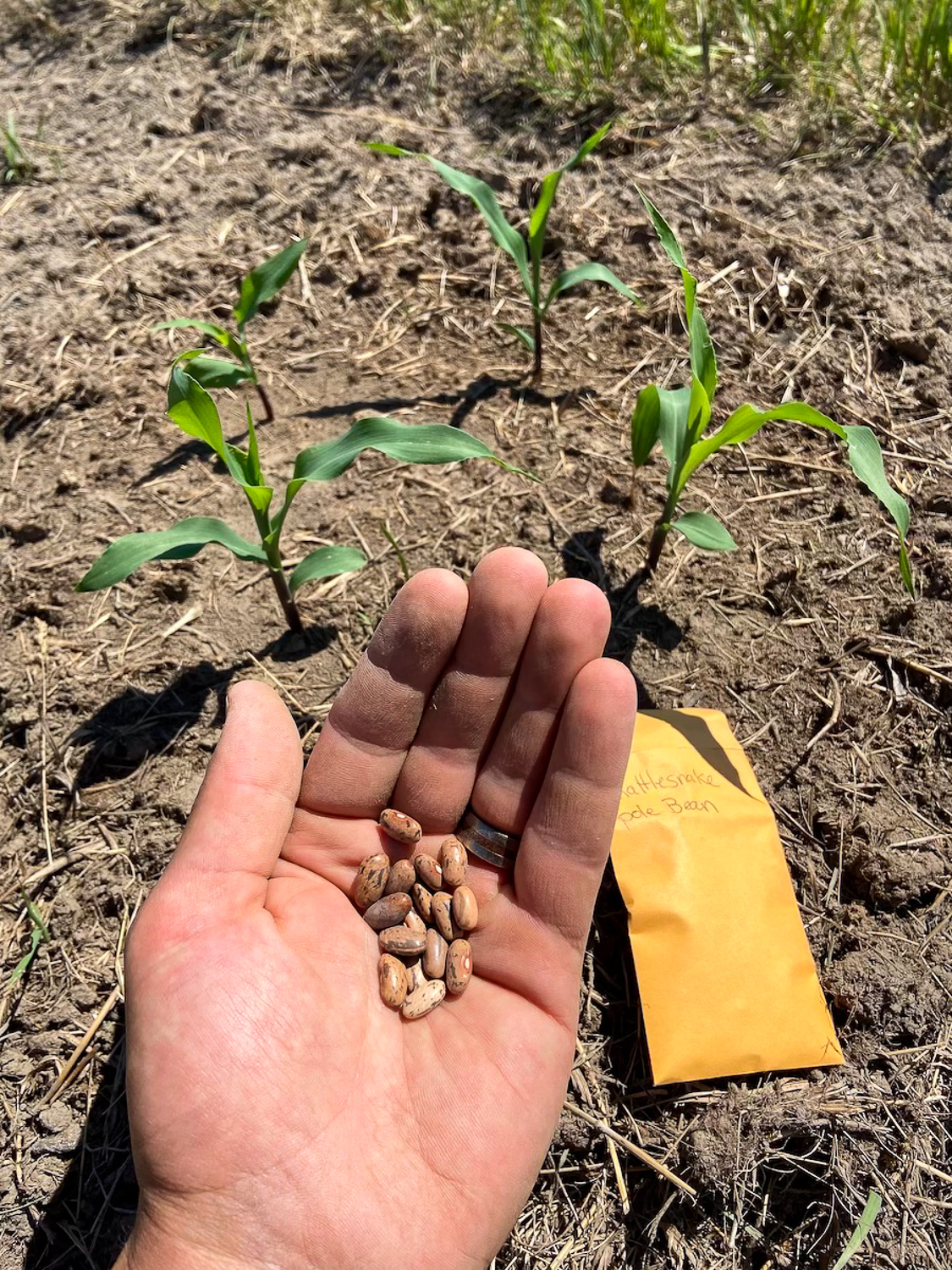
Corn is planted first. We plant 4 corn seeds in a square, centered on the mound, and spaced 6” apart. If you have young kids, a 6” square magnatile is a perfect template and makes it extra fun!
Tip: Corn is best planted around 2” deep into the soil. Early on, we planted corn too shallow (1” or less), and this leads to a root system that will not establish deep enough to support the weight of trellising beans, resulting in corn stalks falling over.


Beans
After 1-2 weeks, or when the corn is established and 1-2” tall, you can plant beans. Plant 4-6 bean plants around the corn stalks in the center. Beans are typically planted 1-1.5” deep.
Traditionally, 4 bean plants are planted per mound for a 1:1, bean-corn ratio. This is probably the best place to start. But we’ve resorted to planting 6 bean plants per mound for a higher bean yield. Though you do occasionally see a corn stalk or two timber due to too much weight from the beans.
Tip: Usually, at this point, if any corn plants did not germinate, we’ll throw an extra corn seed in that space and hope it can establish and catch up!


Squash
Plant 2-3 squash seeds in the space between your mounds. One or two squash plants are desired, so you may need to thin if all seeds germinate. Winter squash seed is typically planted about 1” deep.
Tip: We often form a smaller mound or bridge with the soil between the mounds to plant our cluster of squash into. Leaving the corn/bean mounds intact, we again take the landscape rake and pull together some of the soil between mounds. This also allows you to knock down many of the early weeds that have begun forming on the exposed soil prior to the squash ground cover blocking them out.
Squash is typically planted 1-2 weeks following your bean planting. Or, we have often planted our squash at the same time as our beans (especially when getting a later start with planting than desired).


When to start your three sisters garden depends on your growing zone. We are in zone 5b, and tend to be on the later side with our planting. The earliest we have started planting our corn is late May, and the latest is mid-June. Both worked out just fine and provided a fine harvest come fall.
The risk you run up against is winter conditions setting in early and possibly damaging crops prior to harvest. You want enough time for the corn and beans to dry out on the plant, as well as the squash to fully vine ripen, prior to harvest.

Best Varieties of Corn, Beans, and Squash for the Three Sisters
We have tried several different varieties of all three crops—corn, beans, and winter squash—over the years. All have worked well. I’ll list them all out below, but at the top of each list, I’ll have the variety we’ve landed on as our favorite.
Corn
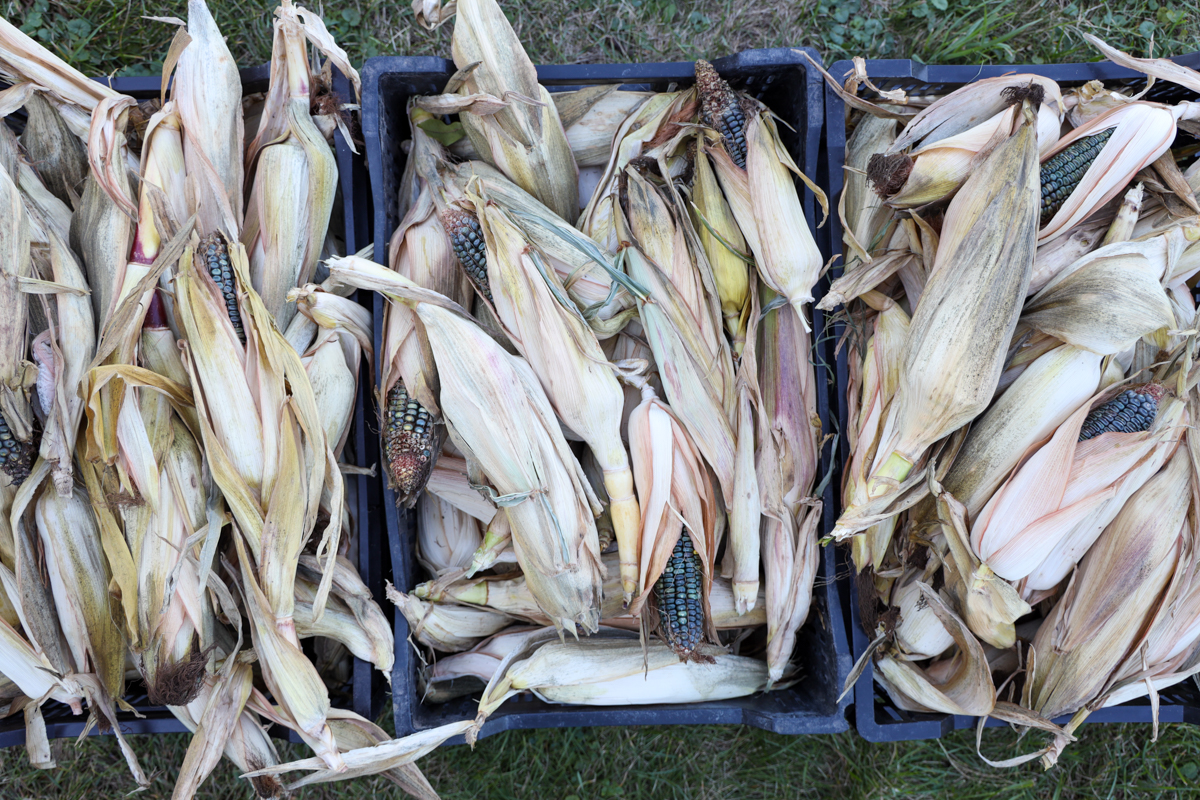
We typically grow a dent corn variety, but some sweet corn varieties could also be suitable. You want to look for corn that grows a tall, strong stalk, with substantial roots.
- Oaxacan Green Dent Corn
- Seneca Red Stalker Corn
- Stowell’s Evergreen (organic) Sweet Corn

Beans
There are so many fun and colorful bean varieties out there to choose from, but here are a few we’ve liked.
- Cherokee Trail of Tears Black Bean
- Rattlesnake Pole Bean
- Beefy Resilient Grex Dry Bush Bean
Note: Bush beans are not as ideal as pole beans in the three sisters system. But the Beefy Resilient Grex Dry Bush Bean is one that Carol Deppe recommended in the Resilient Gardener, so we gave it a try one year!


Squash
Winter Squash varieties are also endless. Just note that, in order to save seed, you’ll likely want to stick to growing one variety to avoid cross-pollination.
- Waltham Butternut
- Sibley
- Hubbard
- Tahitian
- Jarrahdale Pumpkin
Our favorite spot for picking up seed is from Seed Savers Exchange, and most of the seed above can be found there.


How To Harvest a Three Sisters Garden (and store crops away)
The order and timing of harvesting a three sisters garden may vary year by year. For instance, the year we grew sweet corn, harvesting our sweet corn mid-season was the first crop harvested, while, when growing dent corn, it is typically the last crop.
If there is a risk of frost ahead, beans will jump to the priority list (followed by squash), since they are the most susceptible to frost.
And sometimes, pest pressure on one particular crop might dictate pulling it in as early as possible.
Winter Squash Harvesting + Storage
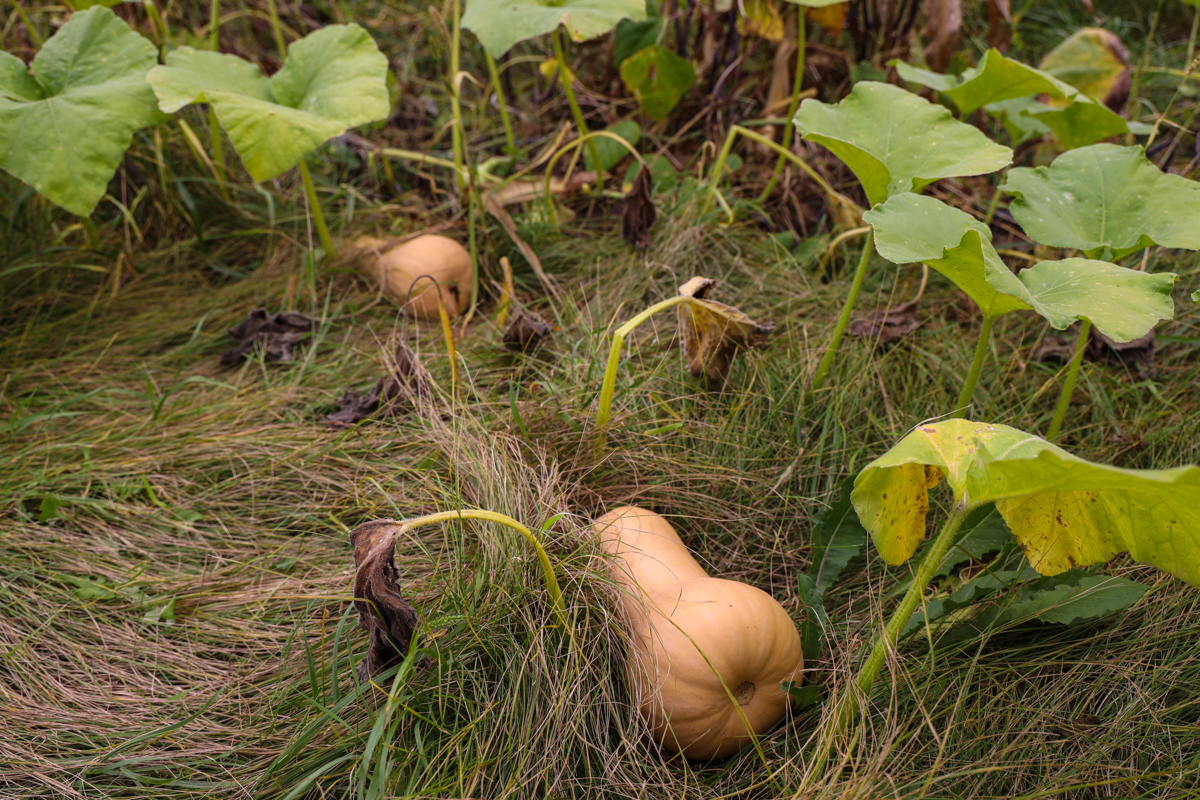
But typically, we would start with harvesting winter squash first. Because squash sprawl and cover the entirety of the garden area. This eliminates the risk of stepping on hidden squash and allows for easier access inward to harvest the rest.
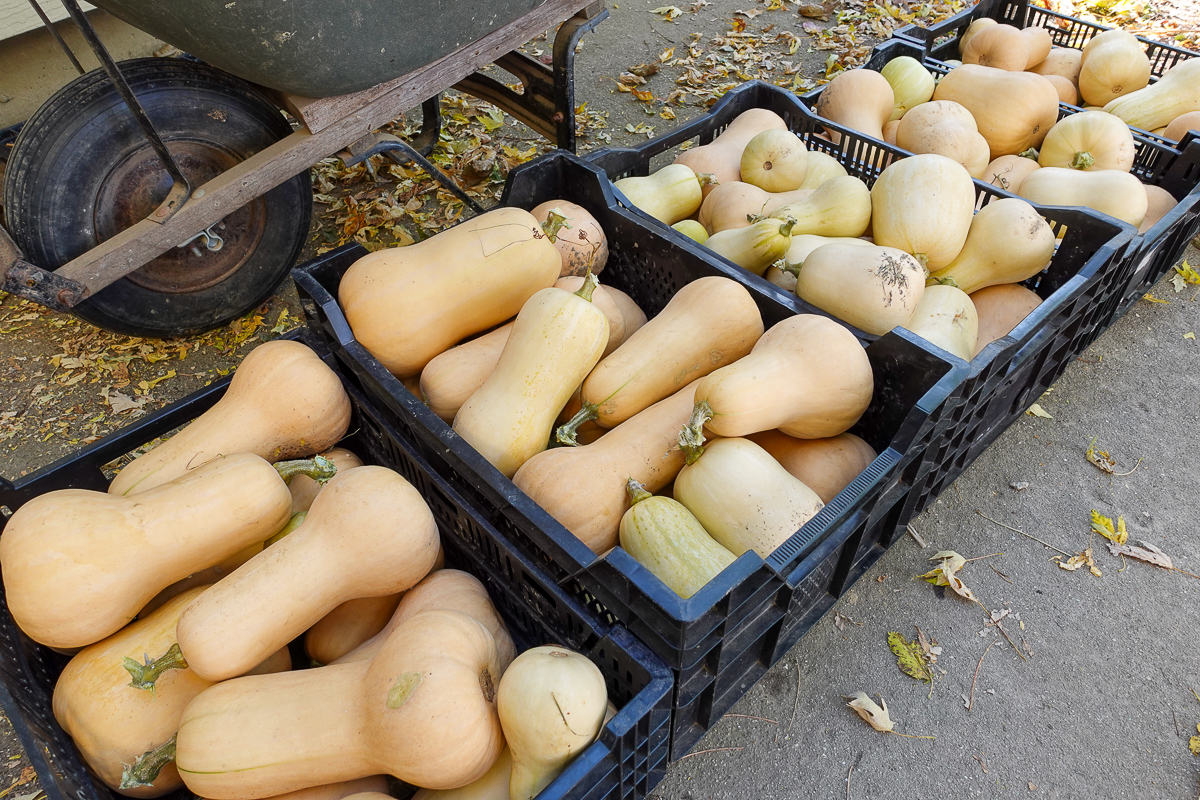
For our favorite Waltham Butternut squash, we know it’s ready to harvest when the skin has turned fully from green to orange/yellow, and the stem snaps off the vine easily. We collect into storage bins and then lay the squash out in a single layer on storage racks for several weeks to cure.
After curing, you can store them away long term back into your storage bins, or we like to just leave them in a single layer on the racks. Like all of our storage crops, we store them in the unfinished basement of our ranch home, and most will typically store fine until the following growing season.


Beans Harvesting + Storage
Next, we’d typically harvest beans. Beans should wait to be harvested until completely dried out, which means the outside shell has turned gray or brown (sometimes deep purple), and will crunch or snap similar to a fall leaf. Beans that aren’t fully dried out should be separated so they don’t run the risk of turning the whole batch moldy.
Locating beans in a three sisters garden can be tedious. The dried beans often turn a similar color to the dried out corn stalks and blend in. It’s a fun treasure hunt for the kids. But it’s best just to take it one mound at a time, and comb through it as much as possible before moving to the next. Any left behind are feeding the surrounding wildlife!
Once the dried beans are shelled (removing beans from outer shell), we like to store them in a food-grade 5-gallon bucket with a gamma lid. These can sometimes be found at your local hardware store, or we like to get them from Azure Standard.


dent corn Harvesting + Storage
Your last crop to harvest will typically be dent corn, since dried corn can withstand frost. Your beans can also wrap themselves tightly around ears of corn, so harvesting would mean disrupting the beans. But you will want to keep close tabs on your corn as critters can quickly start picking off ears and rapidly deplete your harvest.
To harvest, we simply grab the stalk firmly with one hand and pull down the ear with the other hand to snap it off. You will want to shuck, or remove the outer husk of the corn, within a couple of days of harvesting to prevent the corn from molding. Once shucked, the corn should then be stored in a location with plenty of airflow for a few weeks so the corn can fully dry out. We like to do this in our open-air storage bins, or ears can be hung up to dry.
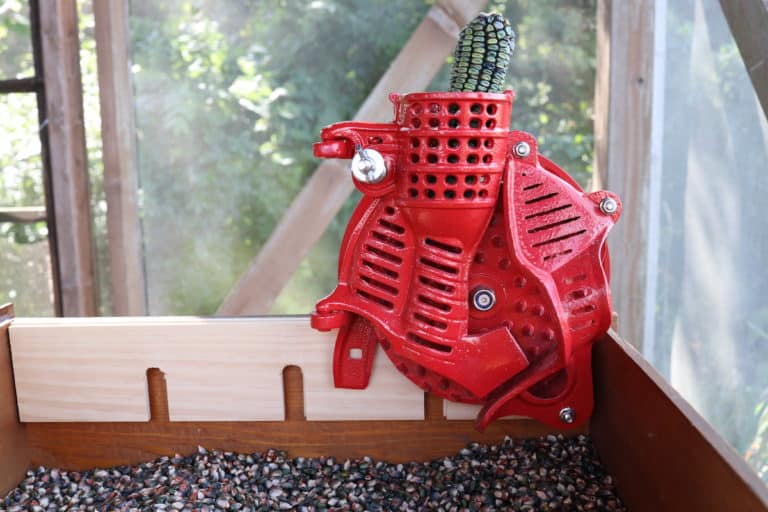
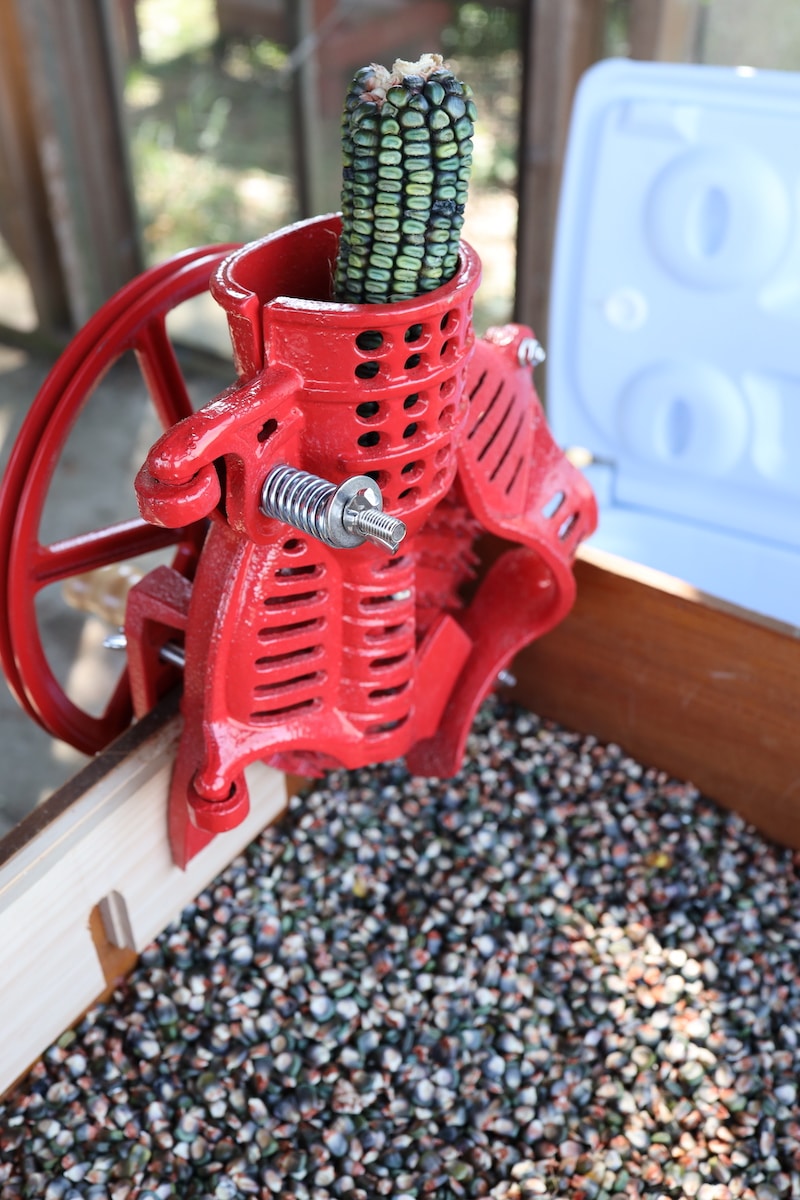
Once fully dried, corn kernels can be left on the ear for storage. Or, the ears can be shelled—the process of removing the corn kernels from the ear. Shelled corn kernels are then ready to use when needed. We’ve done shelling by hand in the past, but we did invest in a manual corn sheller a few years ago, which makes this process a breeze.
Once shelled, we also store dried dent corn in our basement in food-grade, 5-gallon buckets with a gamma lid.



Three Sisters Garden – Frequently Asked Questions
How much space do I need for a three sisters garden?
This depends on your needs and your space! We find one 150’ long row to be an appropriate amount for our family to have a year-round supply of corn, beans, and squash on hand. Usually with some extra for sharing with others. Even a few mounds of three sisters can produce an abundance of food for you and your family in a relatively small space!
Can you plant the three sisters in a raised bed?
Yes! We have seen others do it. Just be aware that, unless you employ some aggressive rerouting and organizing techniques for your squash, the vines will likely spill out of the raised bed into the surrounding space.
Can you plant sweet corn in the three sisters?
Indeed, you can! We did this last season for the first time with great success! Just make sure to select a sweet corn variety known for tall and strong stalks. And two suggestions for harvesting. First, be ready to harvest your sweet corn early. It’s not like dent corn, waiting will not help, and you want to harvest at peak ripeness for sweet and tender corn. Second, take your time harvesting as you’ll likely need to do some untangling of still growing bean plants when wrapped tightly around ears of corn.

Can other plant types be substituted in the three sisters?
There are other plants that can be considered in the three sisters in place of corn, beans, or squash. For instance, cowpeas could be used instead of beans. Or melons could work in place of squash. But, there is also a reason why the three sisters are the three sisters, and have stood the test of time.
Do you need to irrigate a three sisters garden?
The short answer is, no, you should not need to irrigate a three sisters garden. If you live in a climate with moderate rainfall, that should be substantial enough. Corn, beans, and squash are all relatively drought-resistant, especially when grown together.
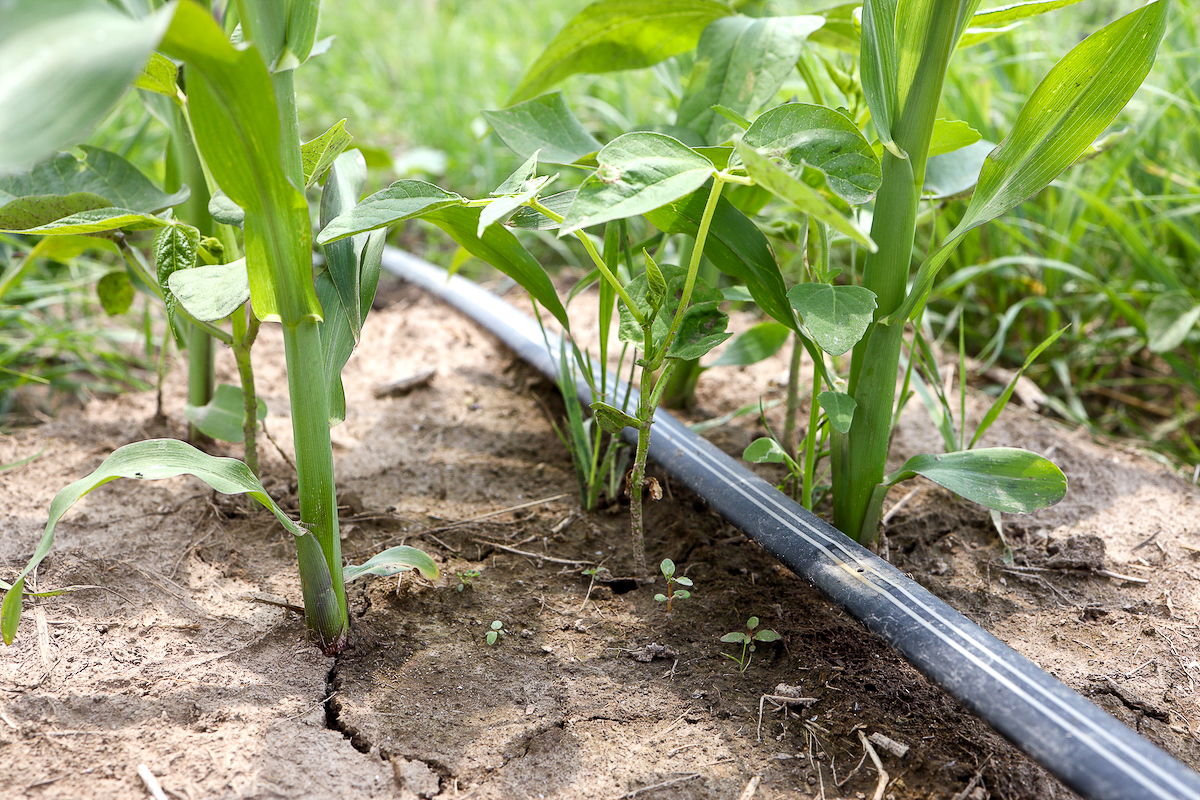
However, we do use a basic drip irrigation system with great results. And because the whole system runs in a single straight line, drip irrigation is particularly well-suited for efficiently irrigating a three sisters garden. We put together an in-depth post, which explains all the components you need to build your own drip irrigation system.

Backwards Thinking…
On a recent family trip to the National Parks in Utah, our family came across this sign describing the lifestyle of the people indigenous to the park.

This very technique of growing and storing food has sustained many generations before. Yet another benefit of growing the three sisters is being able to partake in that rich history.
As modern society has shifted away from nature and more towards science, diverse farming has gone by the wayside, making way for monocropping and factory farming practices.
It should be no surprise that indigenous tribes of the past who lived lives wholly in tune with the natural world around them, embraced this simple, beautiful, and bountiful growing method that is the three sisters.
More on Small Scale Farming:
- Homestead Garden Plan – Year Round Food on 1/4 Acre
- Planting, Harvesting, and Curing Garlic for Storage – It’s easy!
- 10 Best Homestead Layout Tips + 5 Acre Example
- Drip Depot Review + How To Build A Drip System
- 10 Essential Storage Crops You Need To Grow
Some of the above links are affiliate links. This means we earn a small commission at no cost to you. We are so appreciative of your support!
Pin it for later!